Indoor Air Quality and Dehumidification in Beaumont, TX
Engineered moisture control, medical-grade filtration, and biological purification for Southeast Texas homes. Connect with experienced technicians for clear project estimates.
Direct Field Dispatch Desk
Connect directly with our local response crew. No automated phone trees.
(409) 404-1746Quick Service Highlights — Indoor Air Quality and Dehumidification
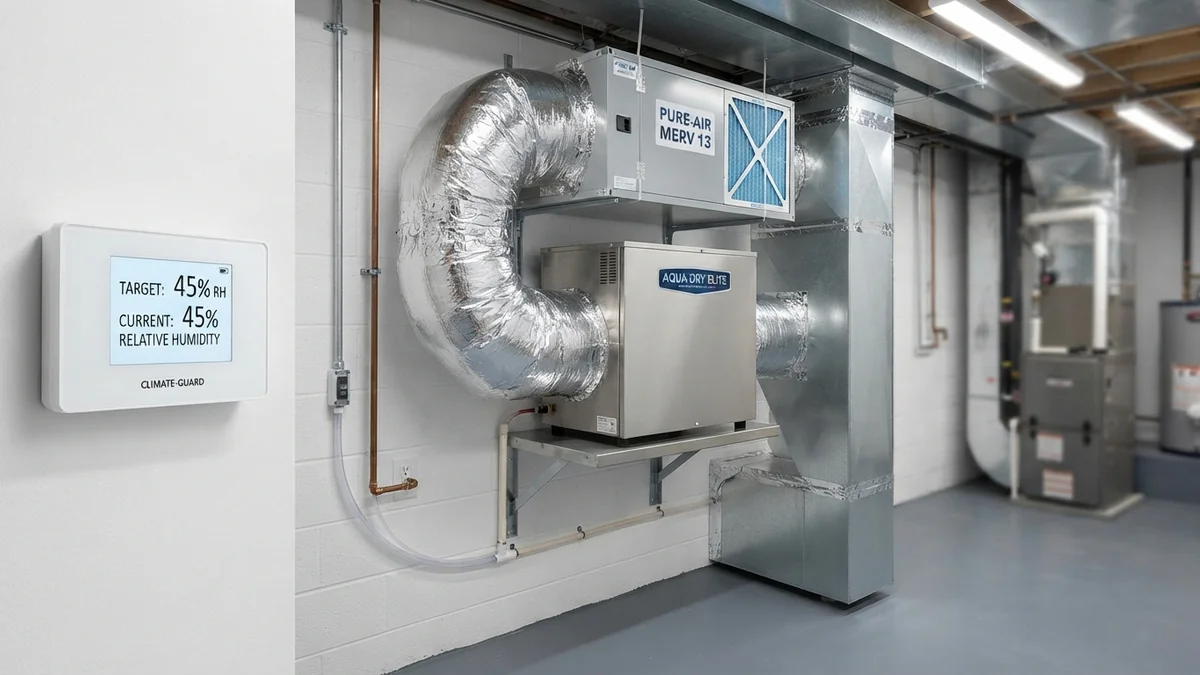
Comprehensive Indoor Air Quality Solutions for Beaumont Properties
Achieving true indoor comfort in Beaumont, Texas involves far more than simply lowering the temperature on your wall thermostat. Located along the upper Texas Gulf Coast, Beaumont experiences sustained morning humidity levels averaging above 80 percent, accompanied by intense summer heat waves and high airborne particulate counts. When heavy atmospheric moisture penetrates modern, tightly sealed homes, it creates an environment where indoor air quality can rapidly deteriorate.
As part of our comprehensive HVAC services directory, our indoor air quality division connects homeowners and commercial facility managers with experienced, professional technicians who specialize in whole-home moisture control and advanced air purification. Standard air conditioning systems are designed primarily to manage temperature; they cannot maintain balanced humidity levels during shoulder seasons, nor can standard 1-inch filters capture microscopic biological spores, pet dander, and airborne volatile organic compounds (VOCs).
Whether you are combating persistent musty odors in Calder Place, managing high indoor moisture in Port Neches, or seeking medical-grade air filtration in the West End of Beaumont, our field dispatch network delivers engineered, whole-home solutions tailored to the challenging Southeast Texas climate.
The Southeast Texas Humidity Challenge: The Shoulder Season Dilemma
To understand why homes in Beaumont struggle with indoor air quality, it is helpful to examine the relationship between temperature and humidity. During the peak of summer (July and August), your air conditioner runs extended cycles to satisfy the thermostat, condensing moisture out of the air as a natural byproduct of cooling.
However, during the spring and autumn "shoulder seasons" (March through May, and October through November), outdoor temperatures frequently hover between a comfortable 72 and 78 degrees Fahrenheit, but ambient relative humidity remains above 85 percent. Under these conditions:
- The Air Conditioner Does Not Run: Because the indoor air is already at your desired temperature (e.g., 74 degrees), the thermostat never calls for cooling.
- Moisture Accumulates Unchecked: Without the air conditioner running, daily household activities (showering, cooking, breathing) combined with outdoor air infiltration cause indoor relative humidity to climb above 65 to 75 percent.
- The Living Space Feels Clammy and Sticky: High humidity makes indoor air feel significantly warmer than the thermostat reading, encouraging homeowners to lower their thermostat setpoint unnecessarily.
- Biological Growth Proliferates: Prolonged relative humidity above 60 percent provides the ideal biological breeding ground for dust mites, fungal mold spores, and bacterial colonies to thrive inside carpets, upholstery, and attic ductwork.
+---------------------------------------------------------------------------------------------------+
|                                 INDOOR RELATIVE HUMIDITY IMPACT ON HEALTH                         |
+------------------------------+--------------------+-----------------------------------------------+
| Indoor Relative Humidity     | Comfort Rating     | Biological and Structural Impact                |
+------------------------------+--------------------+-----------------------------------------------+
| Below 30%                    | Overly Dry         | Dry skin, nasal irritation, static shocks     |
+------------------------------+--------------------+-----------------------------------------------+
| 40% to 50%                   | Ideal Comfort Zone | Inhibits mold, dust mites, and bacteria growth|
+------------------------------+--------------------+-----------------------------------------------+
| 55% to 65%                   | Noticeably Muggy   | Dust mite populations multiply rapidly        |
+------------------------------+--------------------+-----------------------------------------------+
| Above 65%                    | Dangerous Moisture | Active mold growth on drywall, wood rot risk  |
+------------------------------+--------------------+-----------------------------------------------+
Core Indoor Air Quality Solutions for Beaumont Homes
Our participating technicians design, install, and service integrated whole-home systems that treat 100 percent of the air circulating through your ductwork:
+---------------------------------------------------------------------------------------------------+
|                                 INDOOR AIR QUALITY TECHNOLOGY MATRIX                              |
+------------------------------+--------------------+-----------------------+-----------------------+
| Technology Category          | Target Contaminant | Operating Principle   | System Recommendation |
+------------------------------+--------------------+-----------------------+-----------------------+
| Whole-Home Ventilating       | Latent moisture;   | Refrigerated coils wring| Dedicated 70 to 130   |
| Dehumidifiers                | elevated humidity  | out up to 130 pints/day| Pint Whole-Home Unit  |
+------------------------------+--------------------+-----------------------+-----------------------+
| High-Efficiency Media Air    | Dust, pollen, mold | Deep-pleated mechanical| 4" to 5" MERV 11 or   |
| Cleaners                     | spores, pet dander | barrier filtration    | MERV 13 Media Cabinet |
+------------------------------+--------------------+-----------------------+-----------------------+
| Germicidal UV-C Coil         | Microbial slime and| Ultraviolet light     | Dual-lamp UV-C fixture|
| Purifiers                    | fungal coil growth | disrupts pathogen DNA | mounted above coil    |
+------------------------------+--------------------+-----------------------+-----------------------+
| Photocatalytic Air Scrubbers | Chemical VOCs,     | UV light activates    | Titanium dioxide (TiO2)|
| (PCO Systems)                | cooking odors, gas | catalytic oxidizers   | active air purifier   |
+------------------------------+--------------------+-----------------------+-----------------------+
1. Whole-Home Ventilating Dehumidifiers
Unlike portable dehumidifiers that hold small buckets of water, require frequent manual emptying, and only treat a single room, a whole-home dehumidifier is permanently integrated into your central ductwork.
Operating independently of your air conditioning system, a whole-home unit continuously monitors indoor relative humidity via a dedicated digital humidistat. When humidity exceeds your setpoint (typically 48 to 50 percent), the unit pulls return air through high-efficiency refrigeration coils, removes up to 130 pints of moisture per day, routes the condensed water outside through a dedicated gravity drain, and discharges dry, conditioned air back into your home. This allows you to feel comfortable at 75 or 76 degrees, significantly reducing your summer Entergy electricity consumption.
For an in-depth exploration of regional humidity management, consult our guide on HVAC Humidity Control in Southeast Texas.
2. High-Capacity Deep-Pleated Media Air Cleaners
Standard 1-inch fiberglass filters installed in ceiling return grilles are designed solely to prevent large dust particles from clogging your indoor blower motor; they do virtually nothing to clean the air you breathe.
We install 4-inch to 5-inch deep-pleated media filter cabinets directly at the air handler inlet. Rated between MERV 11 and MERV 13, these advanced media filters provide up to 30 times more surface area than standard 1-inch filters. They capture microscopic airborne contaminants—including pollen, mold spores, pet dander, and smoke particles—down to 0.3 microns without restricting airflow or placing damaging static pressure on your blower motor.
3. Germicidal UV-C Coil Purification
Because Beaumont air conditioners extract continuous moisture from indoor air, the dark, damp interior of your evaporator coil cabinet operates as an unintentional incubator for mold, slime, and bacterial biofilm. Over time, this biological buildup restricts airflow, creates musty "dirty sock" odors, and continuously disperses mold spores throughout your living areas.
Installing a germicidal UV-C light fixture directly above the indoor evaporator coil eliminates this hazard. Emitting a specific 254-nanometer wavelength of ultraviolet light, the lamp continuously bathes the coil surfaces, penetrating microbial cellular walls and destroying their DNA to prevent reproduction. Coils remain clean, airflow stays unrestricted, and indoor air stays fresh.
To learn more about maintaining clean cooling coils, explore our AC Maintenance in Beaumont page.
The Role of Ductwork Integrity in Indoor Air Quality
Even the most sophisticated air filtration and dehumidification equipment will fail if your attic duct distribution network is compromised. In Beaumont, attic temperatures frequently reach 140 degrees in summer. If flexible ductwork in your attic has developed tears, loose seams, or deteriorated mastic seals:
- Negative Pressure Sucking Attic Air: Leaks on the return air side of your ductwork pull superheated, dusty, humid attic air directly into the air handler, bypassing your filter and introducing fiberglass insulation particles, dust mites, and roof dust into living areas.
- Positive Pressure Blowing Air into Attics: Leaks on the supply air side pump cold air into the hot attic, creating temperature differentials that cause condensation to pool on duct jackets, leading to attic mold growth.
Our participating technicians perform comprehensive static pressure differential testing, seal plenum junctions with fiber-reinforced mastic and UL-181 foil tape, and replace aged, deteriorating flex duct. Learn more on our Ductwork Services page.
Our Standardized Four-Stage IAQ Audit Protocol
When you schedule an indoor air quality consultation, our technicians follow an empirical, multi-stage assessment protocol:
+---------------------------------------------------------------------------------------------------+
|                               OUR INDOOR AIR QUALITY AUDIT PROTOCOL                               |
+------------------------------+----------------------------------+---------------------------------+
| Audit Stage                  | Specific Testing Procedures      | Customer Benefit                |
+------------------------------+----------------------------------+---------------------------------+
| 1. Psychrometric Moisture    | Measure dry-bulb temperature, wet| Pinpoints unmanaged latent heat |
|    Analysis                  | bulb, and relative humidity %    | loads and shoulder season risks |
+------------------------------+----------------------------------+---------------------------------+
| 2. Evaporator Coil and Drain   | Inspect coil face for biological | Detects hidden microbial growth |
|    Pan Biofilm Inspection    | slime, sludge, and algae clogs   | causing musty indoor odors      |
+------------------------------+----------------------------------+---------------------------------+
| 3. Airflow and Duct Static   | Measure external static pressure | Ensures high-MERV filters will  |
|    Pressure Capacity Audit   | across return and supply plenums | not restrict system airflow     |
+------------------------------+----------------------------------+---------------------------------+
| 4. Fresh Air Ventilation     | Evaluate building envelope and   | Balances fresh outdoor air with |
|    Assessment (ASHRAE 62.2)  | calculate required fresh airflow | mechanical dehumidification     |
+------------------------------+----------------------------------+---------------------------------+
To learn about optimizing existing cooling equipment, explore our AC Repair in Beaumont page.
What Determines Indoor Air Quality System Costs?
Investing in whole-home air quality equipment involves several equipment and installation variables:
+---------------------------------------------------------------------------------------------------+
|                                 IAQ SYSTEM BUDGETING BREAKDOWN                                    |
+------------------------------+----------------------------------+---------------------------------+
| Technology Investment        | Typical Price Range              | Underlying Cost Variables       |
+------------------------------+----------------------------------+---------------------------------+
| 4" to 5" Media Filter Cabinet| $450 to $850                     | Sheet metal transition, MERV    |
| (MERV 11 to 13 Filtration)   | (fully installed)                | rating, and filter housing size |
+------------------------------+----------------------------------+---------------------------------+
| Dual-Lamp Germicidal UV-C    | $550 to $950                     | Electrical wiring to air handler|
| Coil Purification System     | (fully installed)                | cabinet; high-output UV lamps   |
+------------------------------+----------------------------------+---------------------------------+
| Whole-Home Ventilating       | $2,400 to $3,800                 | Dedicated return/supply duct,   |
| Dehumidifier (70-130 Pints)  | (turnkey installation)           | digital humidistat, drain line  |
+------------------------------+----------------------------------+---------------------------------+
| Whole-Home Air Scrubber /    | $950 to $1,450                   | Active PCO cell installation,   |
| PCO Purification System      | (fully installed)                | low-voltage electrical tie-in   |
+------------------------------+----------------------------------+---------------------------------+
Mandatory Regional Pricing Disclosure: Estimates are for budgeting purposes only. Actual prices vary based on on-site conditions, equipment capacity requirements, duct configuration, and manufacturer specifications in Southeast Texas.
For complete pricing details across common HVAC upgrades, review our AC Installation Cost Guide.
Clean-Tech Protocols and Professional Standards
Our participating technicians treat your property with absolute care on every service visit:
- Sanitized Protective Shoe Covers: Technicians slip clean shoe booties over work boots before entering your home.
- Protective Canvas Drop Cloths: Floor runners are placed beneath attic stairs, inside equipment closets, and around tool staging areas.
- Thorough Site Cleanup: Technicians vacuum loose insulation, sweep debris, and remove all packaging materials and replaced components.
- Prior Written Authorization: Work only proceeds after you review and authorize a clear project estimate with itemized labor and materials.
Learn more about our technician vetting standards and company ethics on our About Us page.
Frequently Asked Questions About Indoor Air Quality
Can a whole-home dehumidifier reduce my summer electricity bills?
Yes. Moist air holds heat, making living spaces feel sticky and warm. When a whole-home dehumidifier maintains indoor relative humidity between 45 and 50 percent, your skin can evaporate moisture naturally, allowing you to feel comfortable with your thermostat set 2 to 3 degrees higher (such as 76 degrees instead of 73 degrees). Running an efficient 6-amp dehumidifier to keep indoor air dry uses significantly less electricity than forcing your 20-amp central air conditioner to run continuous cycles.
Will high-MERV filters damage my air conditioning system?
If a 1-inch MERV 13 filter is installed in a standard return grille, it can severely restrict airflow, causing evaporator coil freeze-ups and blower motor overheating. However, a 4-inch or 5-inch deep media cabinet provides up to 30 times more physical filter surface area, allowing it to capture microscopic particles with a MERV 13 rating while maintaining safe, low static pressure across your system.
How often do UV-C germicidal lamps need to be replaced?
Most germicidal UV-C lamps have an effective operating life of 12 to 24 months (9,000 to 18,000 continuous hours). While the lamp may still glow visibly after this time, the germicidal ultraviolet wavelength degrades, reducing its ability to neutralize mold and bacteria. Replacing lamps during annual maintenance ensures continuous protection.
How do I know if my Beaumont home has poor indoor air quality?
Common signs include persistent musty odors that linger even after cleaning, waking up with nasal congestion or dry throats, visible dust accumulating on furniture shortly after dusting, sticky feeling floors during mild weather, and visible biological discoloration on supply vent grilles.
Schedule an Indoor Air Quality Consultation in Beaumont
Transform your home into a healthy, fresh, and properly dehumidified sanctuary. Contact HVAC Beaumont today to schedule an on-site indoor air quality evaluation with clear project estimates and experienced, professional technicians.
- Direct Telephone Dispatch: (409) 404-1746
- Office Location: 350 Pine St, Suite 700, Beaumont, TX 77701
- Service Territory: Beaumont, Nederland, Port Neches, Groves, Lumberton, Port Arthur, and surrounding Jefferson County communities.
- Online Service Request: Fill out our confidential intake form on this page for prompt follow-up from our local dispatch desk.
Need Immediate Service?
Speak directly with our local response crew for prompt dispatch, upfront diagnostics, and clear project estimates in Beaumont.
Call (409) 404-1746Complementary Services
Local Service Territory
Our 4-Step HVAC Service Protocol
Engineered to guarantee punctuality, upfront technical clarity, and verified Southeast Texas climate compliance.
Direct Intake and Route
Direct telephone contact with our Beaumont field desk to document symptoms, evaluate water overflow risks, and route the closest service unit.
Empirical Diagnostic
Comprehensive physical testing of your condenser, blower motor, refrigerant pressures, static airflow, and electrical capacitors without guesswork.
Clear Project Estimate
We explain the root mechanical cause and present a transparent, itemized written estimate for your authorization prior to starting repairs.
Precision Execution
Precision execution using OEM components, thorough vacuum cleanup, temperature split verification, and final homeowner sign-off.
Request an HVAC Estimate in Beaumont
Submit your project details for rapid follow-up and clear project estimates.
Speak Directly With Our Field Dispatch Desk
Connect immediately with our local response crew for prompt dispatch, clear project estimates, and verified Southeast Texas climate performance.