Air Conditioning Repair in Beaumont, TX
Rapid, empirical diagnostic troubleshooting and precision cooling repairs across Beaumont and Jefferson County. Connect directly with experienced technicians.
Direct Field Dispatch Desk
Connect directly with our local response crew. No automated phone trees.
(409) 404-1746Quick Service Highlights — AC Repair and Diagnostics
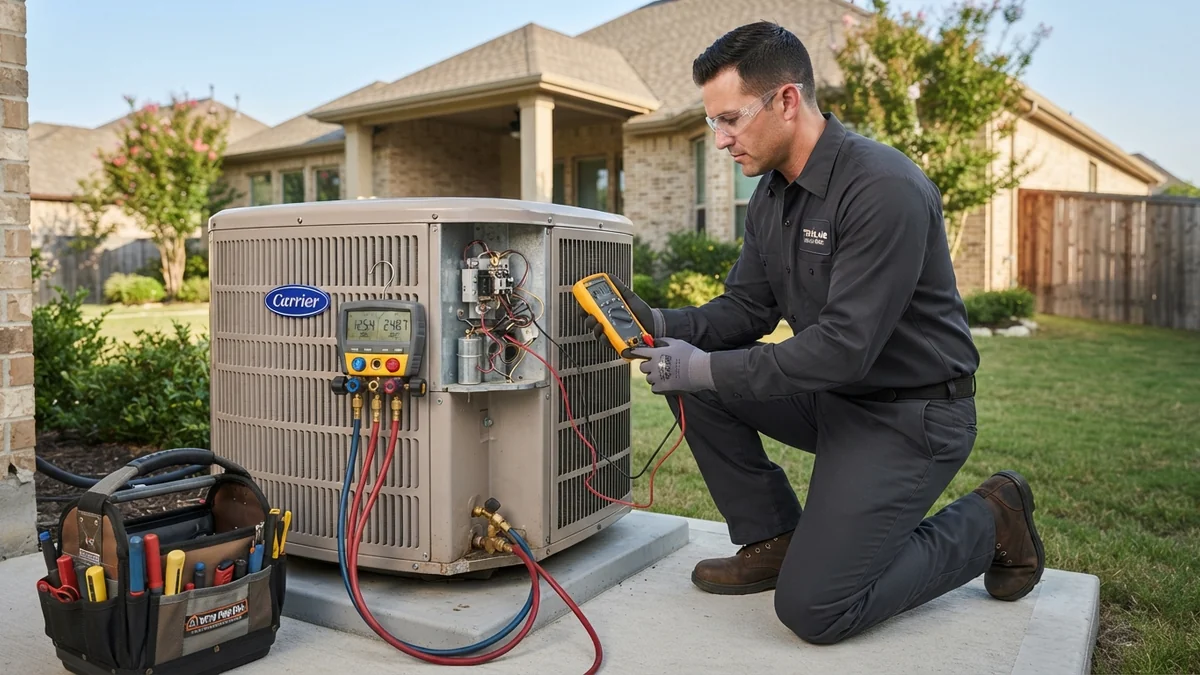
Reliable Air Conditioning Repair for Beaumont Homes and Businesses
When an air conditioner fails in the middle of a Southeast Texas summer, indoor temperatures can become unbearable within hours. In Beaumont, where ambient afternoon temperatures routinely push past 95 degrees Fahrenheit and morning relative humidity averages above 80 percent, a functioning cooling system is essential for your family's health, safety, and property protection.
As part of our comprehensive HVAC services directory, our air conditioning repair division connects homeowners and commercial property managers with experienced, background-vetted technicians who understand the rigorous demands of our coastal subtropical climate. We do not believe in superficial part-swapping or high-pressure sales pitches. Instead, our technicians follow an empirical diagnostic process to identify the exact mechanical or electrical root cause of your cooling failure, providing a clear project estimate before any physical work begins.
Whether your outdoor condensing unit is humming loudly without spinning in the West End, your indoor air handler is blowing warm air in Calder Place, or an attic condensate drain line has tripped your safety float switch in Nederland, our field dispatch desk routes qualified technicians equipped with the tools, instruments, and replacement components necessary to restore your comfort promptly.
Common AC Failure Modes in Southeast Texas
The extreme heat and moisture typical of Jefferson County place tremendous mechanical and electrical stress on cooling equipment. Understanding the common failure modes helps homeowners recognize early warning signs before a minor issue develops into a catastrophic compressor burnout:
+---------------------------------------------------------------------------------------------------+
|                                 COMMON AC FAILURE MODES AND SYMPTOMS                              |
+------------------------------+----------------------------------+---------------------------------+
| Observable Symptom           | Probable Mechanical Root Cause   | Professional Diagnostic Action  |
+------------------------------+----------------------------------+---------------------------------+
| Outdoor Fan Spinning, but    | Defective dual-run capacitor or  | Test microfarads with meter;    |
| Air from Vents is Warm       | pitted electrical contactor      | measure compressor winding ohms |
+------------------------------+----------------------------------+---------------------------------+
| System Shuts Off Completely; | Clogged primary condensate line  | Clear drain line with nitrogen; |
| Thermostat Screen is Blank   | tripping secondary float switch  | treat drain pan for algae sludge|
+------------------------------+----------------------------------+---------------------------------+
| Ice Encasing Indoor Coil and | Airflow starvation from filter or| Thaw coil safely; check static  |
| Outdoor Copper Suction Line  | low refrigerant from pinhole leak| pressure and measure subcooling |
+------------------------------+----------------------------------+---------------------------------+
| Loud Buzzing or Humming from | Locked compressor rotor or       | Inspect contactor points; check |
| Outdoor Condenser Cabinet    | worn starting components         | start capacitor and relay       |
+------------------------------+----------------------------------+---------------------------------+
| Frequent Short Cycling On    | High-pressure switch tripping due| Chemically clean condenser coil;|
| and Off Every Few Minutes    | to dirty coil or failing motor   | verify fan motor amp draw       |
+------------------------------+----------------------------------+---------------------------------+
1. Failed Dual-Run Capacitors and Contactors
The dual-run capacitor is the most common point of failure in Beaumont cooling systems. This cylindrical component stores electrical energy to provide the initial torque burst required to start the compressor and outdoor fan motor, while stabilizing running voltage. Under prolonged summer heat waves, high operating temperatures cause the dielectric fluid inside capacitors to degrade, resulting in swollen tops, declining microfarad (µF) ratings, or internal short circuits.
When a capacitor weakens, the compressor motor struggles to turn over, drawing excessive amperage until thermal overload protectors trip. If left unaddressed, continuing to cycle a unit with a weak capacitor can burn out the compressor motor windings, turning an affordable electrical repair into an expensive system replacement. Our technicians test capacitors under load using true-RMS multimeters and replace degraded units with heavy-duty, high-temperature replacement parts.
2. Clogged Condensate Drain Lines and Float Switch Tripping
Because Beaumont air conditioners extract up to 20 gallons of water vapor from indoor air every day, condensate drainage is a continuous process. Standing water in warm, dark attic air handler pans creates an ideal environment for biological algae, slime, and fungal colonies to flourish. Over time, this biological sludge plugs the 3/4-inch PVC drain line.
Modern building codes require secondary safety float switches installed in the drain line or emergency overflow pan. When water backs up, the float switch rises, cutting the 24-volt control signal to the thermostat or condensing unit to prevent water from spilling through your sheetrock ceiling. Our technicians clear plugged lines using high-pressure nitrogen, flush the trap with antimicrobial solutions, and verify float switch operation.
3. Evaporator Coil Leaks and Frozen Systems
If you notice ice forming on the brass service valves of your outdoor unit or encasing the indoor air handler cabinet, turn the system off immediately. A frozen evaporator coil indicates that the refrigerant boiling point inside the coil has dropped below 32 degrees Fahrenheit. In Southeast Texas, this is typically caused by:
- Severe Airflow Starvation: A dirty 1-inch return air filter, blocked supply registers, or a blower wheel caked with pet dander and dust prevents warm indoor air from transferring heat to the refrigerant.
- Undercharged Sealed System: Formicary corrosion caused by household VOCs and moisture can create microscopic pinhole leaks in copper or aluminum coil tubes, allowing refrigerant to escape over time.
Our technicians perform electronic leak detection, measure refrigerant superheat and subcooling against manufacturer charging charts, and identify whether coil repair or replacement is the most cost-effective solution. For step-by-step guidance on handling ice buildup, review our diagnostic guide on frozen AC evaporator coils.
Our Standardized Four-Stage Diagnostic Protocol
When a technician arrives at your Beaumont property, you receive a thorough, systematic diagnostic evaluation designed to uncover the root cause of the breakdown:
+---------------------------------------------------------------------------------------------------+
|                               FOUR-STAGE AC DIAGNOSTIC PROTOCOL                                   |
+------------------------------+----------------------------------+---------------------------------+
| Diagnostic Stage             | Specific Technical Tests         | Value to Property Owner         |
+------------------------------+----------------------------------+---------------------------------+
| Stage 1: High-Voltage and    | Test line voltage, capacitor µF, | Protects sensitive motors from  |
| Control Circuit Inspection   | contactor points, and thermostat | electrical damage and shorts    |
+------------------------------+----------------------------------+---------------------------------+
| Stage 2: Mechanical Airflow  | Measure external static pressure | Ensures proper CFM distribution |
| and Blower Assessment        | and inspect blower wheel balance | and prevents coil freezing      |
+------------------------------+----------------------------------+---------------------------------+
| Stage 3: Sealed Refrigerant  | Connect digital manifolds to test| Identifies micro-leaks, TXV     |
| Cycle Diagnostics            | operating subcooling and superheat | restrictions, and low charges   |
+------------------------------+----------------------------------+---------------------------------+
| Stage 4: Drainage and Safety | Inspect primary drain line, trap,| Safeguards attic framing and    |
| Overflow Verification        | secondary pan, and float switches| ceilings from water damage      |
+------------------------------+----------------------------------+---------------------------------+
The Danger of Superficial "Gas Top-Offs"
Less qualified contractors may offer to add a pound or two of refrigerant to a struggling air conditioner without locating the source of the leak. In closed-loop HVAC systems, refrigerant is not consumed like fuel; if a unit is low on charge, a leak is present. Adding refrigerant without repairing the leak wastes money, vents regulated chemicals into the atmosphere, and risks overcharging the system.
Overcharging elevates head pressure, placing unnecessary strain on the compressor and reducing dehumidification efficiency. Our technicians always locate the source of refrigerant loss using ultrasonic leak detectors or ultraviolet dye before discussing repair options.
When to Repair vs. When to Replace Your AC
Facing an expensive repair on an older air conditioner raises a critical question: is it smarter to repair the existing unit, or invest in a new, high-efficiency replacement? We help property owners evaluate this decision objectively using the $5,000 Rule of Thumb:
$$\text{Age of Unit (Years)} \times \text{Estimated Repair Cost ($) } \gtrless $5,000$$
- If the calculation yields a figure under $5,000, and the equipment has generally been dependable, repair is usually the practical financial choice.
- If the calculation exceeds $5,000, or if the system utilizes phased-out R-22 refrigerant and has suffered a major compressor burnout or coil rupture, investing in AC system replacement provides superior long-term reliability, lower monthly electric bills, and comprehensive manufacturer warranty protection.
+---------------------------------------------------------------------------------------------------+
|                                 AC REPAIR VS. REPLACEMENT SCORECARD                               |
+------------------------------+----------------------------------+---------------------------------+
| Factor                       | Strongly Favors Repair           | Strongly Favors Replacement     |
+------------------------------+----------------------------------+---------------------------------+
| System Age                   | Less than 8 to 10 years old      | 12 to 15+ years old             |
+------------------------------+----------------------------------+---------------------------------+
| Refrigerant Type             | Modern R-410A                    | Phased-out R-22 Freon           |
+------------------------------+----------------------------------+---------------------------------+
| Repair Frequency             | First breakdown in recent memory | Multiple failures this season   |
+------------------------------+----------------------------------+---------------------------------+
| Energy Consumption           | Electric bills stable and normal | Bills climbing steadily         |
+------------------------------+----------------------------------+---------------------------------+
| Summer Humidity Control      | Keeps home crisp below 50% RH    | Home feels sticky and muggy     |
+------------------------------+----------------------------------+---------------------------------+
If your system is nearing the end of its useful lifespan, review our comprehensive AC Installation in Beaumont page to learn about modern SEER2 efficiency tiers and Manual J load calculations.
What Determines AC Repair Costs in Beaumont?
We believe in complete pricing transparency. Before any repair work begins, our technicians provide an itemized written estimate detailing the exact scope of labor and parts.
+---------------------------------------------------------------------------------------------------+
|                                 TYPICAL AC REPAIR COST FACTORS                                    |
+------------------------------+----------------------------------+---------------------------------+
| Repair Category              | Typical Price Range              | Underlying Cost Variables       |
+------------------------------+----------------------------------+---------------------------------+
| Diagnostic Service Call      | $79 to $129                      | Vehicle transit, initial safety |
|                              |                                  | inspection, and testing         |
+------------------------------+----------------------------------+---------------------------------+
| Electrical Components        | $150 to $450                     | Dual-run capacitors, contactors,|
|                              |                                  | hard start kits, float switches |
+------------------------------+----------------------------------+---------------------------------+
| Blower and Condenser Motors    | $450 to $1,100                   | PSC vs ECM variable-speed       |
|                              |                                  | motors; horsepower rating       |
+------------------------------+----------------------------------+---------------------------------+
| Sealed Refrigeration System  | $1,200 to $2,800                 | Evaporator coil replacement,    |
|                              |                                  | TXV valve, refrigerant recovery |
+------------------------------+----------------------------------+---------------------------------+
Mandatory Regional Pricing Disclosure: Estimates are for budgeting purposes only. Actual prices vary based on on-site conditions, equipment capacity requirements, duct configuration, and manufacturer specifications in Southeast Texas.
Key variables affecting your repair invoice include:
- Component Accessibility: Ground-level outdoor condensing units are faster to service than indoor air handlers installed in cramped attic spaces with difficult pull-down access.
- Refrigerant Classification: Older R-22 refrigerant is scarce and expensive due to international environmental phaseouts. Modern systems use R-410A or emerging low-GWP refrigerants, which require specific digital recovery and vacuum procedures.
- Warranty Status: If your system was registered with the manufacturer within the last 5 to 10 years, replacement parts may be covered under warranty, leaving you responsible only for labor and diagnostic fees.
For an exhaustive breakdown of repair pricing across Jefferson County, visit our dedicated AC Repair Cost Guide.
Clean-Tech Property Protocols on Every Service Call
We understand that welcoming technicians into your home requires trust. Our service network enforces strict clean-tech standards to ensure your living space is respected:
- Sanitized Protective Shoe Covers: Technicians never step onto your carpets, tile, or hardwood flooring without slipping fresh, heavy-duty shoe booties over their boots.
- Protective Canvas Drop Cloths: Floor runners and drop cloths are placed beneath attic access hatches, indoor equipment closets, and tool staging zones to catch insulation dust and debris.
- Thorough Site Cleanup: Technicians vacuum any loose dust, remove all replaced parts and packaging, and leave your property as clean as they found it.
- Prior Written Authorization: Work only proceeds after you review and approve a clear written project estimate detailing all costs.
Learn more about our technician vetting standards and company ethics on our About Us page.
Frequently Asked Questions About AC Repair
Why is my outdoor unit humming, but the fan is not spinning?
This symptom usually indicates a failed dual-run capacitor or an electrical contactor whose contact points have pitted and burned out. In some cases, the condenser fan motor bearings have seized. Shut off your thermostat immediately; continuing to run the system with a stuck fan motor can cause the hermetic compressor to overheat and suffer permanent damage.
How quickly can a technician reach my home in Beaumont?
Our dispatch desk prioritizes urgent cooling shutdowns, especially during extreme heat index conditions. Technicians stationed throughout Beaumont, Port Neches, and Groves are routed directly, typically arriving within agreed service windows.
What should I check before scheduling a service call?
Before calling dispatch, ensure your thermostat has fresh batteries, the temperature setpoint is set at least 3 degrees below current room temperature, your indoor air filter is clean, and the circuit breakers for both the indoor and outdoor units are in the "ON" position. If these basic checks do not resolve the issue, contact our dispatch desk.
Can a clogged drain line cause my air conditioner to stop cooling?
Yes. Modern HVAC installations feature a secondary float switch installed in the condensate drain line or emergency pan. If algae sludge blocks the line, water rises, tripping the switch and cutting power to the thermostat or condensing unit to protect your ceiling from water damage.
Connect with Our Beaumont AC Repair Dispatch Desk
Do not let a broken air conditioner put your home's comfort and safety at risk. Contact HVAC Beaumont today for prompt local dispatch, upfront empirical diagnostics, and clear project estimates from experienced technicians.
- Direct Telephone Dispatch: (409) 404-1746
- Office Location: 350 Pine St, Suite 700, Beaumont, TX 77701
- Service Territory: Beaumont, Nederland, Port Neches, Groves, Lumberton, Port Arthur, and surrounding Jefferson County communities.
- Online Service Request: Submit an inquiry through our Contact Page for prompt follow-up from our local dispatch desk.
Need Immediate Service?
Speak directly with our local response crew for prompt dispatch, upfront diagnostics, and clear project estimates in Beaumont.
Call (409) 404-1746Complementary Services
Local Service Territory
Our 4-Step HVAC Service Protocol
Engineered to guarantee punctuality, upfront technical clarity, and verified Southeast Texas climate compliance.
Direct Intake and Route
Direct telephone contact with our Beaumont field desk to document symptoms, evaluate water overflow risks, and route the closest service unit.
Empirical Diagnostic
Comprehensive physical testing of your condenser, blower motor, refrigerant pressures, static airflow, and electrical capacitors without guesswork.
Clear Project Estimate
We explain the root mechanical cause and present a transparent, itemized written estimate for your authorization prior to starting repairs.
Precision Execution
Precision execution using OEM components, thorough vacuum cleanup, temperature split verification, and final homeowner sign-off.
Request an HVAC Estimate in Beaumont
Submit your project details for rapid follow-up and clear project estimates.
Speak Directly With Our Field Dispatch Desk
Connect immediately with our local response crew for prompt dispatch, clear project estimates, and verified Southeast Texas climate performance.