Air Conditioning Installation in Beaumont, TX
Engineered cooling system installation tailored to the intense heat and humidity of Southeast Texas. Connect directly with experienced technicians for clear project estimates.
Direct Field Dispatch Desk
Connect directly with our local response crew. No automated phone trees.
(409) 404-1746Quick Service Highlights — AC Installation and Sizing
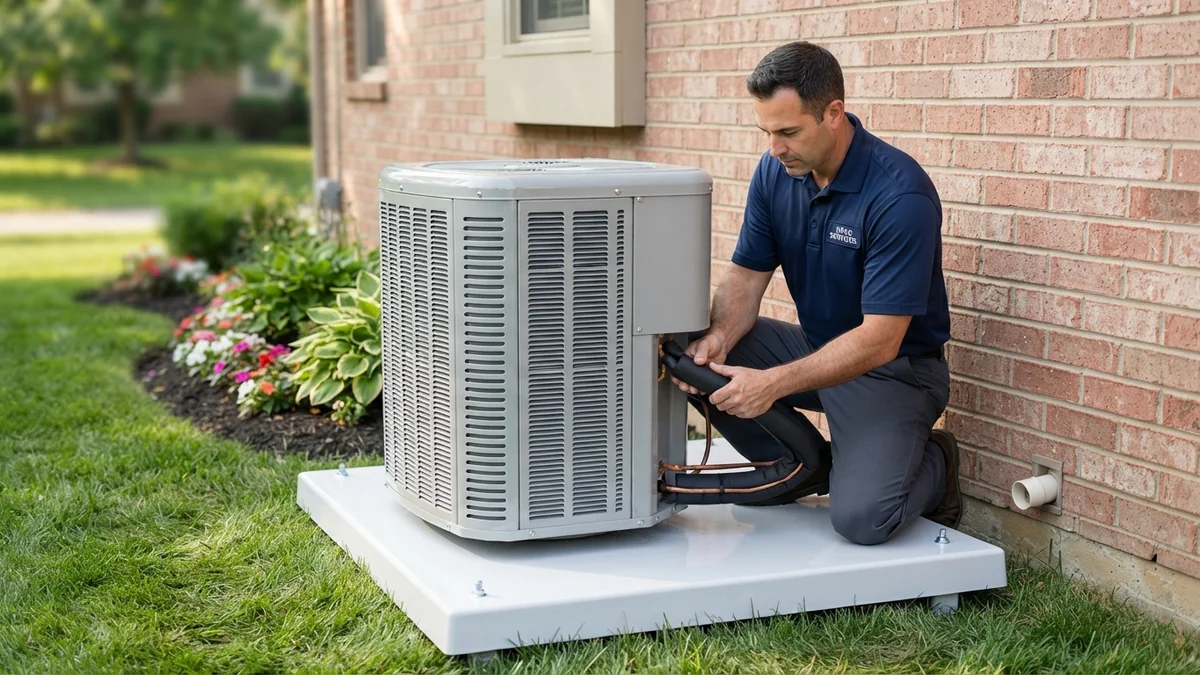
Precision Air Conditioning Installation for Beaumont Properties
Installing a new central air conditioning system is one of the most substantial mechanical and financial investments a property owner will make. In Beaumont, Texas, where summer heat indices routinely exceed 105 degrees Fahrenheit and morning relative humidity averages above 80 percent, selecting and installing the right cooling equipment is critical to ensuring long-term comfort, structural integrity, and manageable electric bills.
As part of our comprehensive HVAC services directory, our air conditioning installation division connects residential homeowners and commercial facility managers with experienced, professional technicians who understand the engineering requirements of the upper Texas Gulf Coast. We do not rely on rough rules of thumb or generic tonnage estimates based solely on square footage. Instead, our participating technicians conduct detailed on-site heat load calculations, evaluate your home's duct distribution capacity, and install modern, SEER2-compliant equipment designed to maximize dehumidification and lower electrical consumption.
Whether building a custom residence in Lumberton, retrofitting an older home in Calder Place, or modernizing an inefficient cooling system along the Dowlen Road corridor in Beaumont, our field dispatch network ensures your new cooling system is engineered for reliable, code-compliant performance.
Why Proper Sizing Matters: Manual J Load Calculations in Southeast Texas
In cooler, drier climates, an oversized air conditioning system might simply cause slight temperature fluctuations. In Beaumont, however, improper system sizing leads to serious indoor comfort, biological mold, and equipment reliability problems.
| Sizing Dimension | Oversized Air Conditioning System | Properly Engineered Manual J System |
|---|---|---|
| Operational Cycle Length | Short bursts of 6 to 9 minutes; frequent on/off cycling | Extended, continuous run cycles of 18 to 30+ minutes |
| Dehumidification Efficacy | Extremely poor; shuts off before coil reaches deep condensation | Superior; cold coil wrings gallons of moisture from air daily |
| Indoor Comfort and Feel | Clammy, cold rooms; sticky hard floors; noticeable cold drafts | Crisp, dry comfort with sustained relative humidity below 50% |
| Biological Mold and Spore Risk | High risk of mold growth inside air ducts, drywall, and closets | Inhibited microbial growth; dry building materials and air |
| Electrical Startup Stress | Frequent high-amp inrush surges wear down capacitors and motor | Low mechanical stress; smooth modulation and lower power draw |
| Annual Utility Expenses | Artificially high power bills from continuous startup peaks | Optimized SEER2 performance; 20% to 35% lower monthly bills |
The Thermodynamic Physics of Latent vs Sensible Heat Removal
A central air conditioner performs two distinct thermodynamic functions:
- Sensible Heat Reduction: Extracting thermal energy to lower the dry-bulb temperature measured by your wall thermostat.
- Latent Heat Removal: Extracting water vapor suspended in the air. To wring water vapor from humid air, warm return air must pass across an evaporator coil operating below the atmospheric dew point (typically 50 to 54 degrees Fahrenheit) for a sustained operating period.
When an unqualified contractor installs an oversized 4-ton unit in a home that strictly requires 3 tons of capacity according to load standards, the oversized system floods the ductwork with chilled air, satisfying the wall thermostat in eight minutes.
Because the indoor blower turns off long before the aluminum coil fins can drain their accumulated condensation, the moisture remains trapped in the air handler or re-evaporates back into the home. Indoor humidity remains elevated above 65 percent, leaving the home feeling like a cold, clammy cave.
The ACCA Manual J and Manual S Engineering Standard
Our participating technicians conduct comprehensive ACCA (Air Conditioning Contractors of America) Manual J load calculations that evaluate:
- Conditioned cubic volume, ceiling heights, and room-by-room architectural geometry.
- Exterior wall framing, brick veneer thickness, attic insulation R-values, and radiant barriers.
- Total window square footage, glass solar heat gain coefficients (SHGC), orientation to morning and afternoon sun, and window shading overhangs.
- Internal sensible and latent heat loads generated by occupants, cooking appliances, lighting, and home electronics.
- Infiltration rates through building envelope leaks, doors, and attic penetrations.
Following the Manual J calculation, technicians apply Manual S equipment selection protocols to select cooling equipment that matches both the sensible and latent load profiles of your specific Southeast Texas residence.
Understanding Modern SEER2 Efficiency Standards
The United States Department of Energy mandates rigorous SEER2 (Seasonal Energy Efficiency Ratio 2) standards for all newly manufactured residential cooling systems. SEER2 testing incorporates higher external static pressure resistance (0.50 inches of water column instead of the legacy 0.10 inches) to accurately reflect real-world ductwork conditions in modern homes.
| Efficiency Classification | Operating Compressor Architecture | Financial and Comfort Profile in Southeast Texas |
|---|---|---|
| Standard Baseline (14.3 to 15.2 SEER2) | Single-stage scroll compressor; runs at 100% capacity whenever called | Lowest initial purchase cost; dependable cooling for budget-conscious homeowners |
| Mid-Tier Performance (16.0 to 17.5 SEER2) | Two-stage compressor; operates at 65-70% low speed during mild weather | Enhanced moisture extraction; 15% to 20% lower monthly electric utility consumption |
| Premium Inverter (18.0 to 22.0+ SEER2) | Variable-speed inverter; modulates between 25% and 100% in 1% increments | Best-in-class humidity control; whisper-quiet sound; up to 35% monthly energy savings |
Evaluating Single-Stage, Two-Stage, and Variable-Speed Inverters
- Single-Stage Systems: Feature a traditional compressor motor that operates at a single speed: 100 percent on or completely off. While dependable and budget-friendly, single-stage units experience noticeable temperature and humidity swings during Southeast Texas shoulder seasons.
- Two-Stage Systems: Feature a compressor engineered with two distinct mechanical outputs: high stage (100 percent) for blistering 100-degree summer heat waves, and low stage (approximately 70 percent) for moderate days. The low stage runs longer, quieter cycles that provide substantially better moisture extraction.
- Variable-Speed Inverter Systems: Represent the pinnacle of modern cooling engineering. Inverter-driven compressors and modulating electronic expansion valves adjust their operating speed dynamically to match real-time indoor thermal loads. By humming along continuously at low speeds, inverter systems keep indoor humidity strictly between 45 percent and 50 percent while consuming remarkably little electricity.
To review detailed cost ranges across equipment tiers, explore our comprehensive AC Installation Cost Breakdown.
Turnkey AC Installation Workflow and Engineering Protocols
A high-performance air conditioner requires meticulous physical installation. Even the most advanced 20 SEER2 condensing unit will fail prematurely if connected to undersized, leaking ductwork or charged improperly. Our participating technicians follow an exhaustive six-stage installation protocol:
| Installation Stage | Core Technical Field Procedures | Engineering Objective |
|---|---|---|
| Stage 1: Load and Ductwork Verification | ACCA Manual J load calculation; Manual D duct static pressure testing | Verify proper equipment tonnage and ensure duct system can deliver required CFM |
| Stage 2: Safe Recovery and Site Prep | EPA-certified recovery of old refrigerant; safe recycling of scrap metal | Eliminate environmental contamination; protect property landscaping and floors |
| Stage 3: Pad and Plenum Fabrication | Heavy-duty composite hurricane pad; custom sheet metal transition plenums | Level, vibration-isolated equipment base; aerodynamic, low-turbulence duct transitions |
| Stage 4: Line Set and Drainage Engineering | Nitrogen-purged high-temp brazing; dual PVC drain lines; secondary float switches | Prevent copper oxidation scale; eliminate ceiling water damage risks |
| Stage 5: Deep Vacuum and Weigh-In Charge | Evacuate system below 500 microns; weigh in factory refrigerant with digital scales | Remove moisture and non-condensable gases; guarantee precise operating pressures |
| Stage 6: Full System Commissioning | Measure static pressure, subcooling, superheat, airflow CFM, and temperature split | Validate manufacturer specifications and establish baseline warranty documentation |
Nitrogen-Purged Brazing and Deep Vacuum Evacuation Protocols
During refrigerant line set installation, copper tubing must be brazed using high-temperature silver alloys exceeding 1,100 degrees Fahrenheit. If brazed in atmospheric air, oxygen inside the copper pipe reacts with the intense heat to form black copper oxide scale. Over months of operation, this abrasive scale flakes off, traveling through the refrigeration loop to clog delicate thermostatic expansion valve (TXV) screens and scour compressor bearings.
Our technicians always flow dry nitrogen gas through copper line sets during all brazing operations. The inert nitrogen displaces atmospheric oxygen, leaving the interior of the copper tubing mirror-smooth and completely free of scale.
Following brazing, the closed sealed system is connected to a commercial two-stage vacuum pump and digital micron gauge. The system is evacuated down to below 500 microns of mercury and held under an isolation decay test. This deep vacuum vaporizes and extracts all microscopic moisture and atmospheric gases from the circuit, ensuring maximum compressor longevity and preventing acid formation.
To learn more about optimizing your attic air distribution network during an installation, explore our Ductwork Services Hub.
Vital Protective Components Included in Professional Installations
A premium air conditioning installation involves far more than simply placing an outdoor unit on the soil and sliding an air handler into an attic access. Professional installations integrate critical safeguards engineered for Southeast Texas weather extremes:
1. Heavy-Duty Hurricane Equipment Pads
Outdoor condensing units are set atop reinforced composite equipment pads elevated three to four inches above grade. This elevation protects condenser base pans from standing rainwater during torrential Gulf Coast downpours, eliminates ground soil settling, and guards aluminum fins from weed-eater and lawn equipment impacts.
2. Neoprene Vibration Isolation Dampeners
Specially formulated neoprene vibration dampeners are positioned beneath outdoor condensing unit feet and indoor air handler suspension brackets. These dampeners absorb harmonic mechanical vibration, preventing operational hums and droning noises from transmitting through wall framing and drywall into living areas.
3. Emergency Secondary Drain Pans and Electronic Float Switches
Attic-mounted air handling units are installed inside an oversized, heavy-gauge galvanized secondary drain pan fitted with an independent overflow drain line. Crucially, technicians install dual electronic float switches: one in the primary drain trap and a secondary safety switch in the emergency pan. If biological algae or dust ever obstructs the primary PVC drain line, the float switch instantly cuts 24-volt control power to the condensing unit, shutting down cooling before a single drop of water can soak through your ceiling.
4. Whole-Home Dual-Phase Surge Protective Devices (SPDs)
Lightning strikes along the upper Texas Gulf Coast and utility grid switching cause frequent voltage spikes. A momentary voltage transient can instantly destroy expensive inverter circuit boards, electronic expansion valves, and ECM blower motors. Installing an integrated whole-system surge protector directly at the electrical disconnect protects your heating and cooling equipment against costly electrical damage.
If your current system is operating but experiencing recurring mechanical issues, review our AC Repair in Beaumont guide or evaluate whether a complete AC system replacement represents the more practical financial choice.
What Determines AC Installation Costs in Beaumont?
Every residential property across Jefferson County and Hardin County features unique architectural characteristics that influence final installation pricing:
| Pricing Determinant | Financial Impact | Practical Technical Context |
|---|---|---|
| System Capacity (Tonnage) | Moderate to High | Larger homes (3.5 to 5.0 tons) require heavier equipment, larger line sets, and higher electrical amperage |
| SEER2 Efficiency Rating | High | Advanced two-stage and modulating inverter systems carry higher initial equipment manufacturing costs |
| Ductwork Modifications | Moderate | Upsizing return air drops, adding supply runs, or rebuilding plenums to resolve static pressure bottlenecks |
| Attic and Site Accessibility | Moderate | Narrow hallway closets, steep pull-down attic stairways, and tight utility spaces require additional labor hours |
| Electrical Infrastructure | Low to Moderate | Upgrading older disconnect boxes, installing dedicated 240V circuits, or modernizing breaker panels |
Mandatory Regional Pricing Disclosure: Estimates are for budgeting purposes only. Actual prices vary based on on-site conditions, equipment capacity requirements, duct configuration, and manufacturer specifications in Southeast Texas.
For complete cost schedules, equipment pricing tiers, and financing considerations, review our dedicated AC Installation Cost Guide.
Clean-Tech Protocols and Professional Standards
Installing a major central HVAC system should never leave your home in disarray. Our participating technicians adhere to rigorous clean-tech protocols on every project:
- Sanitized Protective Shoe Covers: Technicians slip clean shoe booties over work boots before entering your home, protecting carpets, tile, and hardwood floors.
- Heavy-Duty Protective Drop Cloths: Canvas floor runners and protective drop cloths are placed along all high-traffic walking corridors, beneath attic ladders, and around work areas.
- Comprehensive Site Cleanup: Field crews vacuum loose insulation fibers, sweep mechanical closets, and haul away the obsolete equipment, scrap copper, and packaging materials for responsible recycling.
- Prior Written Authorization: Work only proceeds after you review and authorize a clear project estimate with itemized labor and materials.
Learn more about our technician vetting standards and company ethics on our About Us page.
Frequently Asked Questions About AC Installation
How long does a full air conditioning installation take?
A standard residential changeout (replacing an existing outdoor condensing unit and indoor air handler) typically takes one full day (6 to 9 hours). If extensive ductwork modifications, new electrical circuits, or major attic plenum redesigns are required, the project may extend into a second day. Technicians ensure the system is operational before leaving for the evening.
What size air conditioning system do I need for my Beaumont home?
As a rough estimate, many homes in Southeast Texas require approximately one ton of cooling capacity per 450 to 600 square feet of conditioned living space. However, choosing equipment based solely on square footage is inaccurate. Sizing must be verified through a formal Manual J calculation that accounts for insulation values, window types, sun exposure, and ceiling height.
Is an all-electric heat pump better than a gas furnace in Beaumont?
For many homeowners in Southeast Texas, a high-efficiency heat pump system is the ideal choice. Because our winters are relatively mild, a heat pump provides efficient cooling all summer while reversing cycle to deliver gentle, low-cost heating throughout the winter without burning natural gas. If your home has existing natural gas connections, a dual-fuel system combining a high-efficiency AC with a gas furnace is also an excellent option.
What type of warranty comes with a new air conditioner?
Most major HVAC manufacturers offer a 10-year limited parts warranty on compressors and functional components when the equipment is registered within 60 to 90 days of installation. Independent installing contractors also provide a workmanship warranty covering installation labor, electrical connections, and refrigerant line brazing.
Can you reuse my existing copper refrigerant lines?
Existing copper line sets can sometimes be reused if they are properly sized for the new equipment's tonnage and rated for higher R-410A operating pressures. However, if the old system suffered a severe compressor burnout that deposited acid and carbon sludge, or if transitioning from phased-out R-22 to a modern refrigerant, technicians must either chemically flush the lines with specialized solvent or replace the line set entirely.
Schedule an On-Site AC Installation Consultation
Ensure your home remains cool, comfortable, and energy-efficient through the hottest Southeast Texas summers. Contact HVAC Beaumont today to schedule an on-site installation assessment with clear project estimates and experienced, professional technicians.
- Direct Telephone Dispatch: (409) 404-1746
- Office Location: 350 Pine St, Suite 700, Beaumont, TX 77701
- Service Territory: Beaumont, Nederland, Port Neches, Groves, Lumberton, Port Arthur, and surrounding Jefferson County communities.
- Online Service Request: Fill out our confidential intake form on this page for prompt follow-up from our local coordination desk.
Need Immediate Service?
Speak directly with our local response crew for prompt dispatch, upfront diagnostics, and clear project estimates in Beaumont.
Call (409) 404-1746Complementary Services
Local Service Territory
Our 4-Step HVAC Service Protocol
Engineered to guarantee punctuality, upfront technical clarity, and verified Southeast Texas climate compliance.
Direct Intake and Route
Direct telephone contact with our Beaumont field desk to document symptoms, evaluate water overflow risks, and route the closest service unit.
Empirical Diagnostic
Comprehensive physical testing of your condenser, blower motor, refrigerant pressures, static airflow, and electrical capacitors without guesswork.
Clear Project Estimate
We explain the root mechanical cause and present a transparent, itemized written estimate for your authorization prior to starting repairs.
Precision Execution
Precision execution using OEM components, thorough vacuum cleanup, temperature split verification, and final homeowner sign-off.
Request an HVAC Estimate in Beaumont
Submit your project details for rapid follow-up and clear project estimates.
Speak Directly With Our Field Dispatch Desk
Connect immediately with our local response crew for prompt dispatch, clear project estimates, and verified Southeast Texas climate performance.