Air Conditioning Replacement in Beaumont, TX
Turnkey HVAC system modernization for aging Beaumont homes. Upgrade from inefficient or failing equipment to modern SEER2 systems with clear project estimates.
Direct Field Dispatch Desk
Connect directly with our local response crew. No automated phone trees.
(409) 404-1746Quick Service Highlights — AC System Replacement
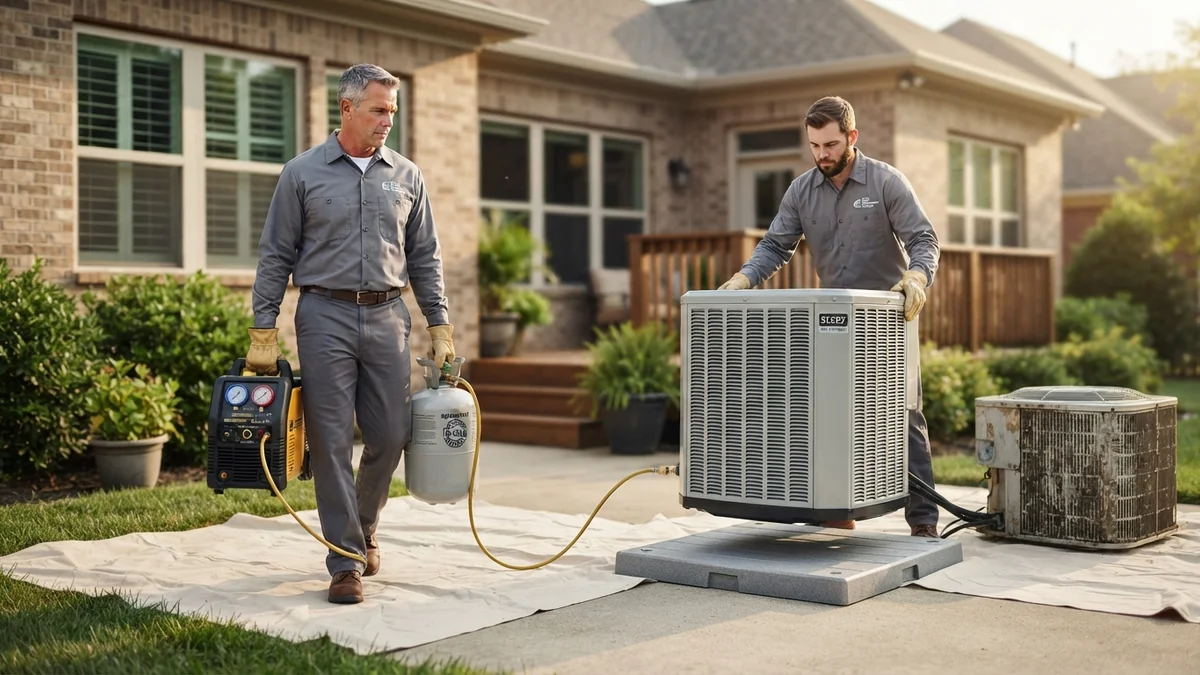
Turnkey Air Conditioning Replacement for Beaumont Properties
Every mechanical climate control system eventually reaches the conclusion of its reliable operating lifespan. In Beaumont, Texas, where air conditioning equipment runs relentlessly under oppressive summer heat indices exceeding 105 degrees Fahrenheit and morning relative humidity levels averaging over 80 percent, systems age far faster than in milder geographic regions. An air conditioning unit that might deliver 18 to 20 years of service in the northern United States typically reaches mechanical exhaustion within 10 to 14 years along the upper Texas Gulf Coast.
As part of our comprehensive HVAC services directory, our air conditioning replacement division connects homeowners and commercial property managers with qualified, professional technicians who specialize in complete system modernization. Upgrading your central cooling equipment is not merely a matter of swapping metal boxes in the yard or attic; it represents an engineering opportunity to correct undersized ductwork bottlenecks, eliminate persistent hot rooms, dramatically improve indoor humidity extraction, and substantially lower monthly electric utility expenses.
Whether your home in Calder Place relies on an obsolete R-22 Freon system with a leaking evaporator coil, your attic air handler in the West End has suffered an electrical burnout, or you are eager to upgrade to a whisper-quiet variable-speed inverter heat pump in Port Neches or Nederland, our field dispatch network ensures a seamless, code-compliant replacement process with clear project estimates and zero high-pressure sales tactics.
When Does AC Replacement Become the Right Decision?
Deciding whether to continue repairing an aging air conditioner or replace the entire system is one of the most significant mechanical dilemmas property owners face. We assist homeowners in evaluating this choice objectively using the industry-standard $5,000 Rule of Thumb:
$$\text{Age of System (Years)} \times \text{Estimated Repair Cost ($)} \gtrless $5,000$$
- If the mathematical product is under $5,000, and your equipment has demonstrated consistent historical reliability, completing the targeted repair is typically the practical financial choice.
- If the calculated figure exceeds $5,000, or if your system utilizes obsolete phased-out refrigerant and has suffered a major compressor burnout or ruptured evaporator coil, investing in total system replacement delivers superior long-term financial value, renewed manufacturer parts warranties, and immediate reductions in monthly electric utility costs.
| Evaluation Metric | Strongly Favors Targeted Repair | Strongly Favors Complete Replacement |
|---|---|---|
| Equipment Age in Southeast Texas | Less than 8 to 10 years old | Exceeds 12 to 14+ years old |
| Refrigerant Chemistry | Modern R-410A with active supply | Phased-out R-22 Freon ($150 to $250+ per pound) |
| Historical Frequency of Breakdowns | First major component failure | Multiple emergency service calls within past two seasons |
| Monthly Electric Utility Expenses | Stable and predictable seasonal bills | Consistently increasing 15% to 30% year over year |
| Living Space Humidity Control | Comfortably maintains indoor RH below 50% | Indoor rooms feel sticky, damp, or clammy |
| Compressor Mechanical Integrity | Normal operating amperage; clean oil | Grounded windings, acid contamination, or locked rotor |
| Evaporator Coil Physical Condition | Clean aluminum fins; zero leaks | Pervasive formicary corrosion or multiple solder leaks |
The Obsolete R-22 Freon Dilemma
If your cooling system was installed prior to 2010, it almost certainly operates on R-22 refrigerant (commonly referred to by the trade name Freon). Under the Montreal Protocol and the United States Clean Air Act, the Environmental Protection Agency (EPA) permanently banned all domestic production and importation of virgin R-22 on January 1, 2020.
Today, only scarce, recycled R-22 chemical stockpiles exist. When an aging R-22 evaporator coil develops a pinhole leak due to coastal corrosion, recharging the system with several pounds of reclaimed refrigerant can cost upwards of $800 to $1,500 for the gas alone, with zero guarantee that another micro-fissure will not emerge weeks later. Pouring substantial capital into an obsolete refrigeration platform that is legally barred from production is financially imprudent. Modernizing to a contemporary, high-efficiency SEER2 platform eliminates reliance on banned chemicals and provides lasting operating peace of mind.
The Transition to Low-GWP Refrigerants (R-454B and R-32)
The heating and air conditioning industry is actively navigating an environmental technology transition mandated by the federal American Innovation and Manufacturing (AIM) Act. Standard R-410A refrigerant is currently being phased down in newly manufactured residential equipment in favor of next-generation A2L low-GWP (Global Warming Potential) refrigerants, primarily R-454B and R-32.
| Refrigerant Classification | Regulatory and Market Status | Normal Operating Pressures | Environmental Impact Rating |
|---|---|---|---|
| R-22 (Freon) | Completely banned from production and import | Moderate (~225 PSI high side) | Severe ozone depletion; high GWP of 1,810 |
| R-410A (Puron) | Active phase-down in newly manufactured units | High (~420 PSI high side) | Zero ozone depletion; moderate GWP of 2,088 |
| R-454B / R-32 (Next-Gen A2L) | Current industry standard for modern systems | High (~425 PSI high side) | Zero ozone depletion; ultra-low GWP (under 466) |
Our participating technicians are thoroughly trained in modern A2L safety handling protocols, specialized non-sparking recovery machines, electronic leak detection sensors, and digital manifold charging procedures. When you replace your air conditioning system through our dispatch network, you receive cutting-edge equipment that meets current building codes and national environmental regulations.
The Dangers of Mismatched Systems: Why Matched AHRI Sets Matter
A common misconception among homeowners facing an expensive condenser breakdown is that they can save money by replacing only the outdoor unit while keeping their 15-year-old indoor air handler and evaporator coil. In the modern HVAC industry, installing a "mismatched" system is one of the most costly errors a homeowner can make.
| Engineering Factor | Mismatched Partial System | Fully Matched AHRI Certified System |
|---|---|---|
| Manufacturer Warranty Coverage | Typically voided or reduced to 1 to 5 years | Full 10-year limited parts and compressor warranty |
| Realized SEER2 Energy Efficiency | Severe drop of 3 to 6 SEER2 rating points | Operates at full tested and verified SEER2 rating |
| Refrigerant Metering Dynamics | Mismatched expansion valve causes liquid floodback | Factory-calibrated TXV or electronic expansion valve |
| Blower Motor Static Pressure | Weak legacy PSC motor fails under modern coils | High-efficiency modulating ECM blower motor |
| Expected Operational Lifespan | Premature compressor failure in 3 to 6 years | Full engineered 12 to 15+ year operational lifespan |
Every high-efficiency air conditioning system is engineered as an interconnected, balanced thermodynamic circuit. The Air-Conditioning, Heating, and Refrigeration Institute (AHRI) rigorously tests and certifies specific outdoor condensing units paired with matching indoor coils and blowers.
Connecting a high-efficiency outdoor condenser to an old, dirty indoor coil leads to improper refrigerant expansion, oil starvation in the compressor crankcase, elevated head pressures, and catastrophic motor burnout. To protect your investment and maintain manufacturer warranty coverage, our technicians only install AHRI-matched system combinations.
The Hidden Costs of Keeping an Inefficient AC Alive
Many homeowners delay replacing an aging air conditioner simply because the equipment "is still running." However, operating an inefficient 12-to-15-year-old cooling system in Southeast Texas carries substantial hidden financial and physical penalties:
1. Inflated Monthly Electric Utility Bills
Older 10 SEER or 12 SEER systems consume massive quantities of kilowatt-hours. In contrast, modern baseline 14.3 SEER2 systems consume 25 to 30 percent less electrical energy, while premium 18+ SEER2 variable-speed inverter units reduce cooling electrical draw by up to 45 percent. Over an extended Southeast Texas summer spanning May through October, this efficiency gap represents hundreds of dollars in utility bill savings.
2. Cascading Mechanical Component Failures
When a hermetic compressor operates with fatigued internal discharge valves, worn bearings, or degraded motor windings, it draws excessive electrical amperage. This severe electrical stress overheats wiring harnesses, burns out contactor points, and repeatedly destroys dual-run capacitors. Paying for continuous minor repairs on a failing system quickly adds up to the cost of a replacement down payment.
3. Attic Water Damage and Ceiling Collapse
Older indoor air handlers utilize stamped galvanized steel drain pans that rust through over years of contact with acidic, stagnant condensation. In Beaumont attics where temperatures reach 140 degrees Fahrenheit, a rusted drain pan can suddenly leak gallons of water directly into ceiling joists and sheetrock, causing extensive ceiling collapse and expensive interior remodeling.
4. Poor Indoor Humidity and Biological Growth
Aging single-stage compressors run in abrupt, short cycles that fail to wring moisture out of humid Southeast Texas air. Sustained indoor relative humidity above 60 percent allows biological mold colonies and dust mites to multiply inside drywall, carpets, and air distribution ductwork. Explore comprehensive moisture defense strategies in our guide to HVAC humidity control in Southeast Texas.
Turnkey AC Replacement Process and Quality Controls
Replacing a central cooling system requires comprehensive mechanical craftsmanship, precision sheet metal fabrication, and certified electrical work. Our participating technicians adhere to a meticulous eight-stage replacement protocol:
| Replacement Stage | Technical Procedures and Quality Controls | Property Protection Standard |
|---|---|---|
| Stage 1: ACCA Manual J Load Sizing | Empirical heat load calculation and duct static pressure evaluation | Eliminates short-cycling and guarantees balanced room temperatures |
| Stage 2: EPA Certified Gas Recovery | Evacuate old refrigerant into dedicated DOT recovery cylinders | Zero atmospheric venting; complete regulatory environmental compliance |
| Stage 3: Teardown and Safe Removal | Disconnect high-voltage disconnects, drain lines, and old hardware | Floor runners protect home interior; old scrap hauled away for recycling |
| Stage 4: Line Set Rehabilitation | Chemical solvent flush with dry nitrogen purge, or new copper line set | Eliminates acid, burnt oil residue, and debris from copper tubing |
| Stage 5: Structural Pad and Hurricane Prep | Composite equipment pad, anti-vibration neoprene feet, hurricane tie-downs | Level outdoor base; meets Jefferson County windstorm code requirements |
| Stage 6: Air Handler and Plenum Fit | Custom sheet metal transitions; sealed with fiber-reinforced mastic | Prevents attic air leakage and lowers total external static pressure |
| Stage 7: Nitrogen-Purged Brazing | Flow dry nitrogen during brazing; evacuate circuit below 500 microns | Prevents internal copper scale formation; extracts moisture vapor |
| Stage 8: Dynamic Commissioning | Measure static pressure, subcooling, superheat, CFM, and temperature split | Activates 10-year parts warranty and validates factory efficiency |
Hurricane Strapping and Texas Windstorm Compliance
Because Jefferson County sits within the designated Texas Gulf Coast windstorm inspection corridor, outdoor condensing units must be securely anchored. Our technicians install heavy-duty, corrosion-resistant stainless steel hurricane strapping and bracket assemblies that anchor the outdoor condensing cabinet firmly to an elevated composite or concrete equipment pad. This ensures your cooling equipment remains stable and compliant with local building authority standards during severe coastal weather events.
To learn more about sizing engineering and efficiency ratings, review our companion guide to AC Installation in Beaumont.
What Determines AC Replacement Costs in Beaumont?
Understanding the variables that influence total replacement investment allows property owners to budget with clarity:
| Pricing Component | Investment Range | Underlying Mechanical Rationale |
|---|---|---|
| Equipment Tonnage and Capacity | Moderate ($3,800 to $6,800 base) | 2.5 to 5.0 ton systems require different compressor sizes and cabinet dimensions |
| SEER2 Efficiency Rating Tier | High ($1,500 to $4,500 tier bump) | Variable-speed inverter systems feature advanced communicating electronic boards |
| Ductwork and Plenum Adjustments | Moderate ($800 to $2,600) | Custom sheet metal transitions, return air upsizing, and mastic air sealing |
| Electrical Infrastructure Modernization | Low to Moderate ($350 to $950) | New fused disconnect box, liquid-tight electrical whip, and circuit breaker sizing |
| Attic Access and Structural Complexity | Low to Moderate ($300 to $800) | Tight closet clearances, steep roof pitches, or narrow pull-down attic stairways |
Mandatory Regional Pricing Disclosure: Estimates are for budgeting purposes only. Actual prices vary based on on-site conditions, equipment capacity requirements, duct configuration, and manufacturer specifications in Southeast Texas.
For an exhaustive analysis of regional equipment pricing, labor rates, and financing options, review our transparent AC Installation and Replacement Cost Guide.
Clean-Tech Protocols and Professional Standards
Replacing an air conditioning system involves transporting heavy machinery through your residence and working in unconditioned attic spaces. Our participating technicians adhere to rigorous clean-tech protocols on every project:
- Sanitized Protective Shoe Covers: Technicians slip durable shoe booties over their work boots before stepping onto carpets, tile, or hardwood floors.
- Heavy-Duty Protective Drop Cloths: Canvas floor runners are placed along all walking routes, beneath attic ladders, and around equipment staging areas.
- Comprehensive Site Cleanup: Field crews vacuum loose attic insulation fibers, sweep mechanical areas, and haul away the obsolete equipment and scrap metal for recycling.
- Prior Written Authorization: Work only proceeds after you review and authorize a clear project estimate with itemized labor and materials.
Learn more about our technician vetting standards and company ethics on our About Us page.
Frequently Asked Questions About AC Replacement
How long does a central air conditioning replacement take?
A standard residential replacement (replacing the outdoor condensing unit and indoor air handler) is typically completed in one working day (6 to 9 hours). If the project requires extensive ductwork redesign, structural framing modifications, or new electrical circuits, the work may extend into a second day. Technicians ensure the system is operational before leaving for the evening.
Can I replace just my outdoor unit and keep my existing indoor coil?
We strongly advise against "mismatched" systems. Connecting a modern high-efficiency outdoor condenser to an older indoor evaporator coil causes severe efficiency losses, improper refrigerant flow, and premature compressor burnout. Most manufacturers will void the warranty on a new condenser unless it is paired with an AHRI-matched indoor coil and metering device.
How much can a new SEER2 air conditioner lower my summer electric bills?
Upgrading from an older 10 SEER or 12 SEER system to a modern 16 to 18 SEER2 unit can lower cooling-related electric consumption by 25 to 40 percent. Over the course of an intense Southeast Texas summer, this reduction can translate to substantial monthly savings on Entergy utility bills.
Do I need to replace my thermostat when I replace my AC?
If your existing thermostat is a basic mechanical or older digital unit, replacing it with a modern programmable or smart thermostat is highly recommended. Variable-speed inverter systems require communicating digital thermostats to dynamically modulate blower speed, humidity removal, and cooling capacity.
Are there financing options available for AC replacement?
Yes. Turnkey air conditioning replacements can be financed through flexible monthly payment programs with competitive interest rates, allowing homeowners to upgrade to high-efficiency inverter equipment without large upfront capital expenditures.
Schedule an AC Replacement Consultation in Beaumont
Do not wait for an aging, inefficient air conditioner to suffer a catastrophic breakdown in the middle of a dangerous summer heat wave. Contact HVAC Beaumont today to schedule an on-site system replacement consultation with clear project estimates and experienced, professional technicians.
- Direct Telephone Dispatch: (409) 404-1746
- Office Location: 350 Pine St, Suite 700, Beaumont, TX 77701
- Service Territory: Beaumont, Nederland, Port Neches, Groves, Lumberton, Port Arthur, and surrounding Jefferson County communities.
- Online Service Request: Fill out our confidential intake form on this page for prompt follow-up from our local dispatch desk.
Need Immediate Service?
Speak directly with our local response crew for prompt dispatch, upfront diagnostics, and clear project estimates in Beaumont.
Call (409) 404-1746Complementary Services
Local Service Territory
Our 4-Step HVAC Service Protocol
Engineered to guarantee punctuality, upfront technical clarity, and verified Southeast Texas climate compliance.
Direct Intake and Route
Direct telephone contact with our Beaumont field desk to document symptoms, evaluate water overflow risks, and route the closest service unit.
Empirical Diagnostic
Comprehensive physical testing of your condenser, blower motor, refrigerant pressures, static airflow, and electrical capacitors without guesswork.
Clear Project Estimate
We explain the root mechanical cause and present a transparent, itemized written estimate for your authorization prior to starting repairs.
Precision Execution
Precision execution using OEM components, thorough vacuum cleanup, temperature split verification, and final homeowner sign-off.
Request an HVAC Estimate in Beaumont
Submit your project details for rapid follow-up and clear project estimates.
Speak Directly With Our Field Dispatch Desk
Connect immediately with our local response crew for prompt dispatch, clear project estimates, and verified Southeast Texas climate performance.